Application detail
Ball Valve Sphere Machining for Small Valve-Ball Production
Ball valve sphere machining is a buyer-selection route for small valve balls that need catalog-matched CNC turning or spherical machining before quotation. AMY CNC's published ATK family exposes ATK40, ATK80 and ATK130 comparison data. Buyers should provide the workpiece drawing, material, diameter, machining allowance, target finish, output requirement, voltage and loading method so the model and configuration can be checked.
What decision does this application page help buyers make?
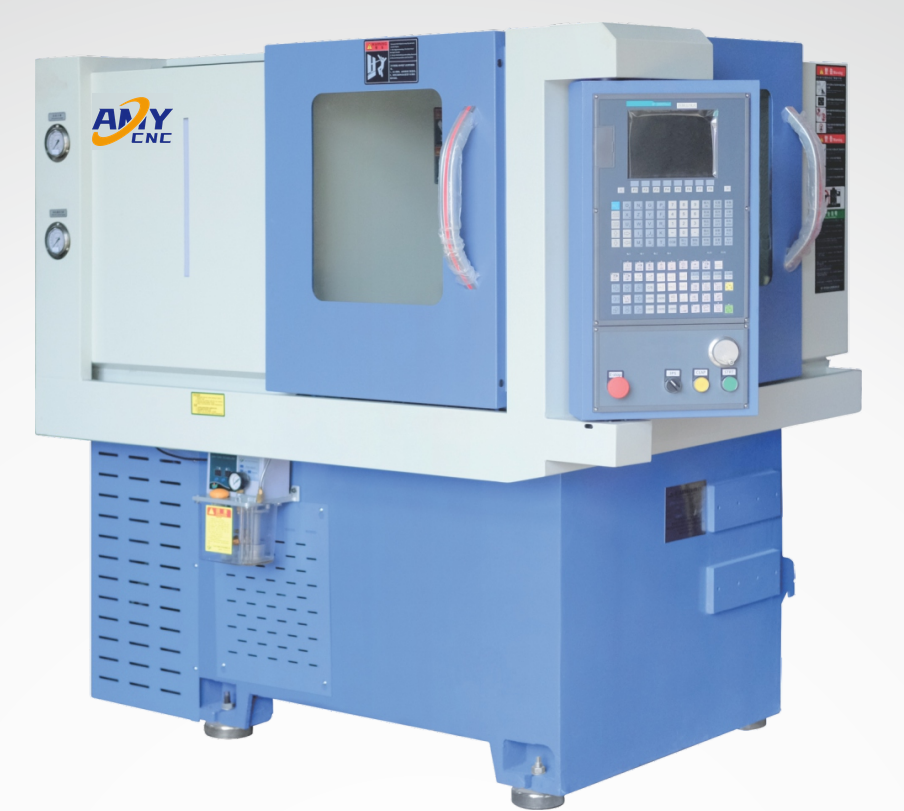
Use this application route when a buyer has a valve ball or spherical component and needs to define the machining requirement before choosing a machine family. Start from the workpiece drawing, material, starting diameter, machining allowance, target surface condition and required output.
The page connects application questions to the published ATK40, ATK80 and ATK130 family. It does not replace a drawing review, guarantee a cycle result or imply that one model fits every ball-valve process.
Should the buyer start with sphere machining or grinding and lapping?
| Buyer starting condition | Comparison route | Data to prepare | Next page |
|---|---|---|---|
| The valve ball starts from bar, blank or partially formed stock and needs defined spherical machining. | Start with the sphere-machining application and ATK family comparison. | Drawing, material, starting size, finished diameter, allowance, output target, loading and voltage. | ATK sphere-machining models |
| The spherical or sealing surface is already formed and the question is correction, contact finishing or lapping. | Compare the grinding and lapping route before assuming the same machine concept. | Current surface condition, diameter, material, stock to remove, finish target, photos and inspection method. | Grinding and lapping category |
| The buyer is unsure which process or machine category applies. | Use the selection matrix and send the drawing for review. | Workpiece photos, drawing, current process, required result and missing operation. | Valve Machine Selection Matrix |
Which published ATK sphere-machining variants can buyers compare?
The values below reproduce the model-specific catalog table already published on the ATK machine page. They are comparison inputs, not buyer-specific acceptance promises.
| Catalog field | ATK40 | ATK80 | ATK130 |
|---|---|---|---|
| Spindle speed | 100-4000 r/min | 100-4000 r/min | 100-2000 r/min |
| Motor power | 3 kW | 3 kW | 4 kW |
| Machine weight | Approx. 1.3 t | Approx. 1.3 t | Approx. 2.1 t |
| Catalog-listed material | Stainless steel | Stainless steel | Stainless steel |
| Machining capacity | 3-5 pcs/min | 3-5 pcs/min | 2-4 pcs/min |
| Maximum bar diameter | 40 mm | 80 mm | 160 mm |
| Working voltage | 380 V | 380 V | 380 V |
Confirm finished ball diameter, starting stock, machining allowance, material grade, actual voltage and required operations before treating a catalog row as a suitable project configuration.
Which media supports this application route?
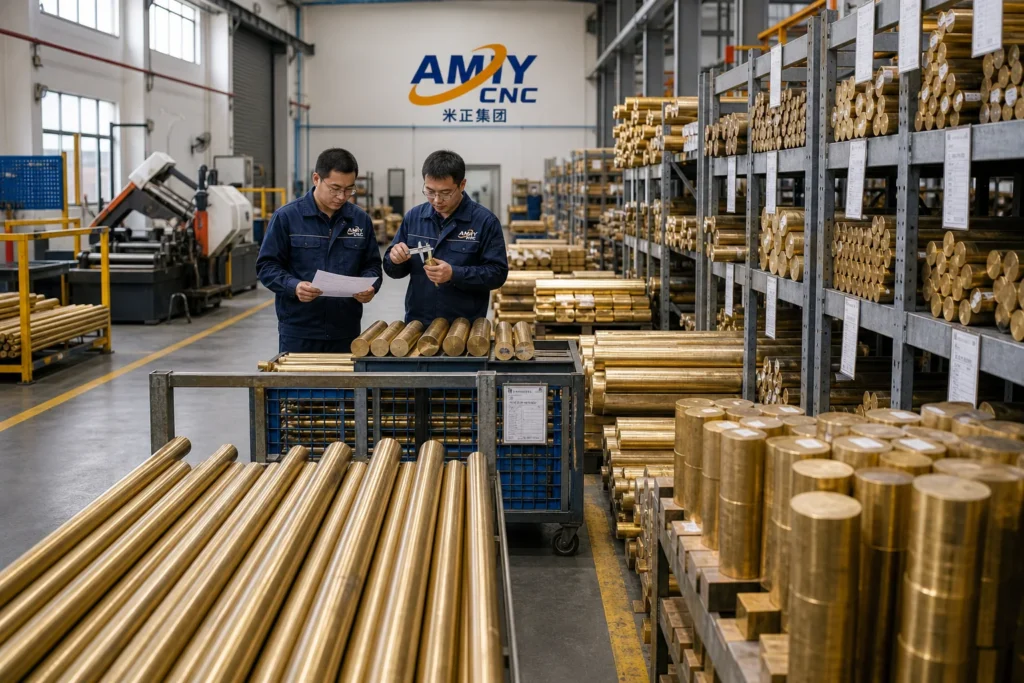
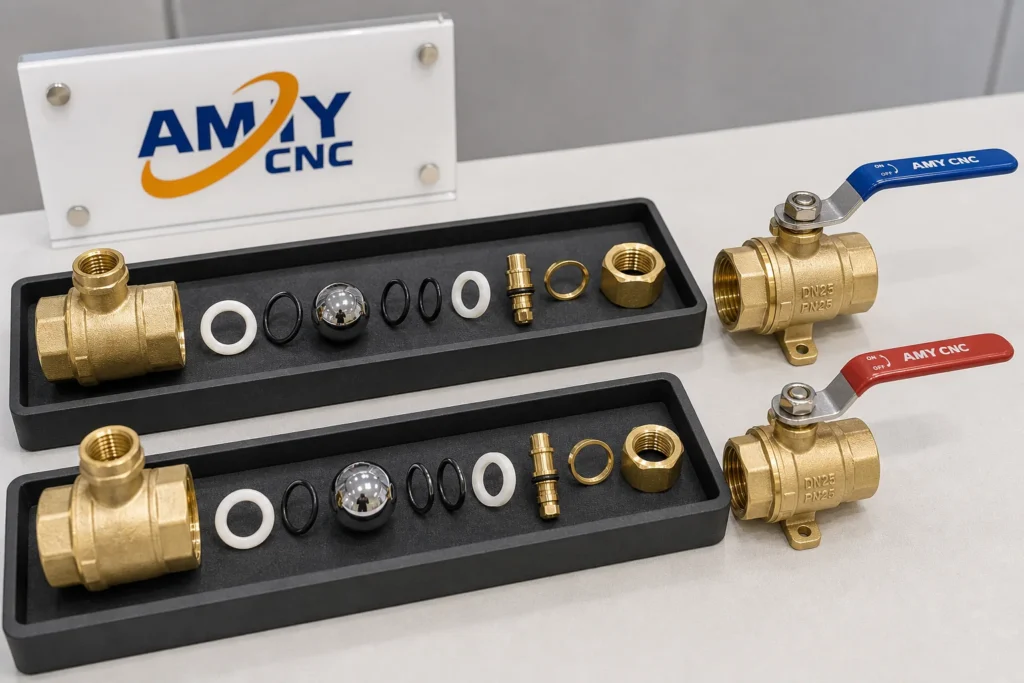
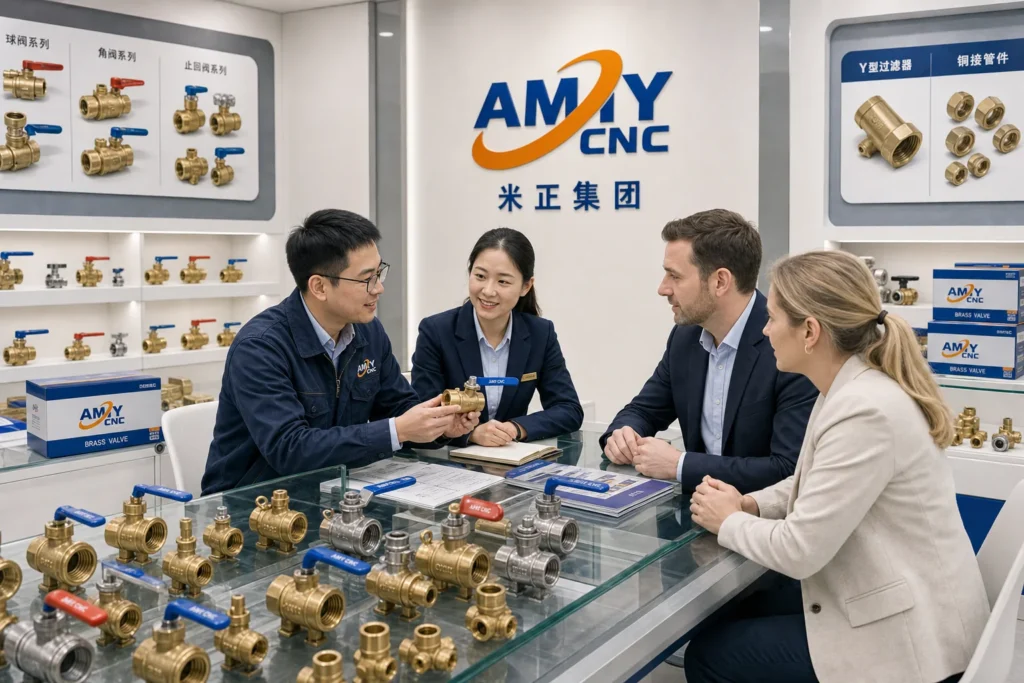
These three supporting images are approved AMY display renders. They illustrate material, component-comparison and selection context; they are not evidence of a factory, customer project, production result or inspection event.
Which details are published and which remain project-dependent?
| Decision area | Published starting evidence | Confirm before quotation |
|---|---|---|
| Model family | ATK40, ATK80 and ATK130 rows are published with spindle, power, weight, capacity, maximum bar diameter and voltage data. | Which row matches the actual blank, finished diameter, allowance and operations. |
| Workpiece material | The current model table lists stainless steel. | Exact material grade, hardness, coating or heat-treatment condition and sample availability. |
| Workholding and loading | The published page requires fixture and loading data during RFQ review. | Datum, clamping points, blank consistency, manual or automated loading and changeover needs. |
| Output and quality | Model-specific catalog capacity rows are available for comparison. | Required cycle target, batch size, dimensional tolerance, surface target and inspection method. |
| Utilities and documents | The table lists 380 V as the catalog working voltage. | Site voltage/frequency, air or coolant needs, floor space, language, packing and requested documents. |
What should buyers include in a ball valve sphere-machining RFQ?
| RFQ data group | What to provide | Why it matters |
|---|---|---|
| Workpiece definition | 2D or 3D drawing, clear photos, starting stock, finished ball diameter and material grade. | These inputs define the practical machining envelope and starting model row. |
| Process requirement | Current blank condition, required operations, machining allowance, target surface condition and downstream process if known. | The same valve ball may need different machining and finishing routes. |
| Production requirement | Batch size, target output, shift pattern, loading preference and expected changeover frequency. | Production context affects handling, fixture and configuration review. |
| Quality and acceptance | Drawing tolerance, surface target, inspection method and trial-part requirement. | Quality requirements must be reviewed before any model or process recommendation. |
| Site and documents | Voltage/frequency, available space, utilities, destination, language, packing and document list. | Site and documentation scope affect the reviewed quotation package. |
How should buyers narrow the sphere-machining route?
- Identify whether the workpiece is a valve ball or another spherical component and attach the clearest drawing.
- Record starting stock, finished size, material, machining allowance and required operations.
- Compare ATK40, ATK80 and ATK130 catalog rows without treating maximum bar diameter as finished ball diameter.
- Separate sphere-machining needs from later grinding, lapping or other finishing questions.
- Submit output, loading, voltage, quality and document requirements through the contextual RFQ route.
Buyer questions about ball valve sphere machining
Is maximum bar diameter the same as finished ball diameter?
No. The catalog table labels this field as maximum bar diameter. Buyers should provide both starting stock and finished dimensions before model review.
Can a model be selected from diameter alone?
No. Material, allowance, required operations, loading, output, tolerance, voltage and fixture needs can change the suitable configuration.
When should grinding or lapping be reviewed separately?
Review the grinding and lapping route when the buyer question concerns correction, contact finishing or lapping of an already formed spherical or sealing surface.
What evidence is needed before a technical quotation?
Provide a workpiece drawing, photos, material, starting and finished dimensions, process goal, output target, quality requirements and site utilities.