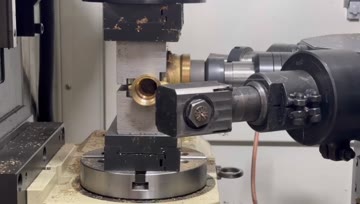
Brass Valve Body Rotary Machining
Inspect visible rotary-fixture clamping, indexed access and tool approach around a brass valve body.
Valve production machinery and special-purpose equipment
AMY CNC publishes six supplier-catalog-supported valve machining model pages for valve-ball grinding, sphere machining, 8- and 6-station transfer machining, gate-valve sealing-face machining, and rotary-table work. Buyers can compare those models, application guidance, process videos and RFQ resources. Valve testing, lapping, portable repair and production-line requests remain requirement-review categories until a named product and configuration are confirmed.
Review two process clips with visible transcripts covering workpiece orientation, clamping, tool access and machining sequence.
The clips document only what is visible in the footage. They do not prove cycle time, tolerance, output, customer ownership or a buyer-specific final configuration.
Inspect visible rotary-fixture clamping, indexed access and tool approach around a brass valve body.
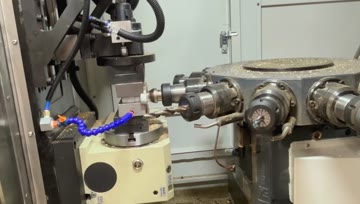
Inspect visible multi-direction tool access, clamping and successive machining steps around a valve fitting.
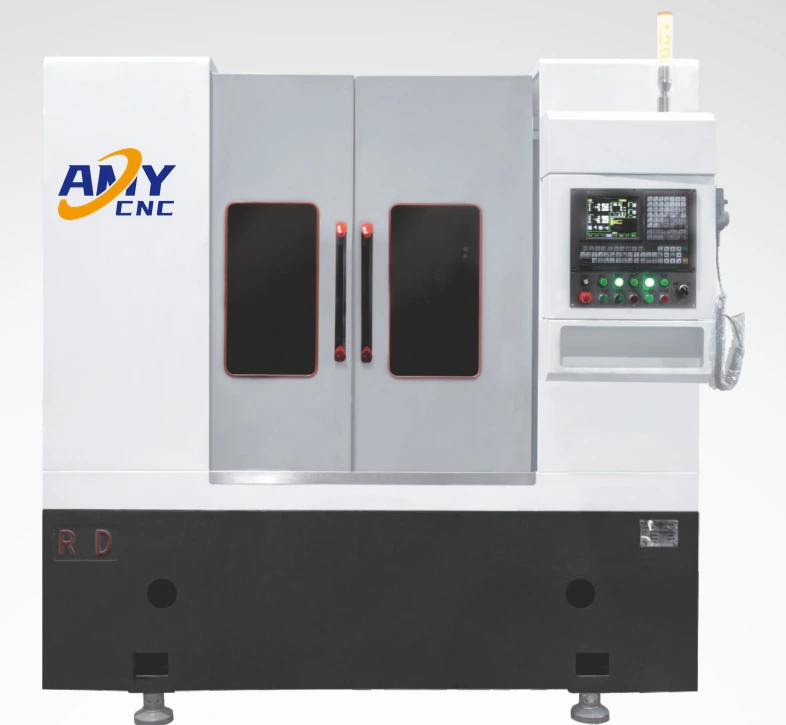
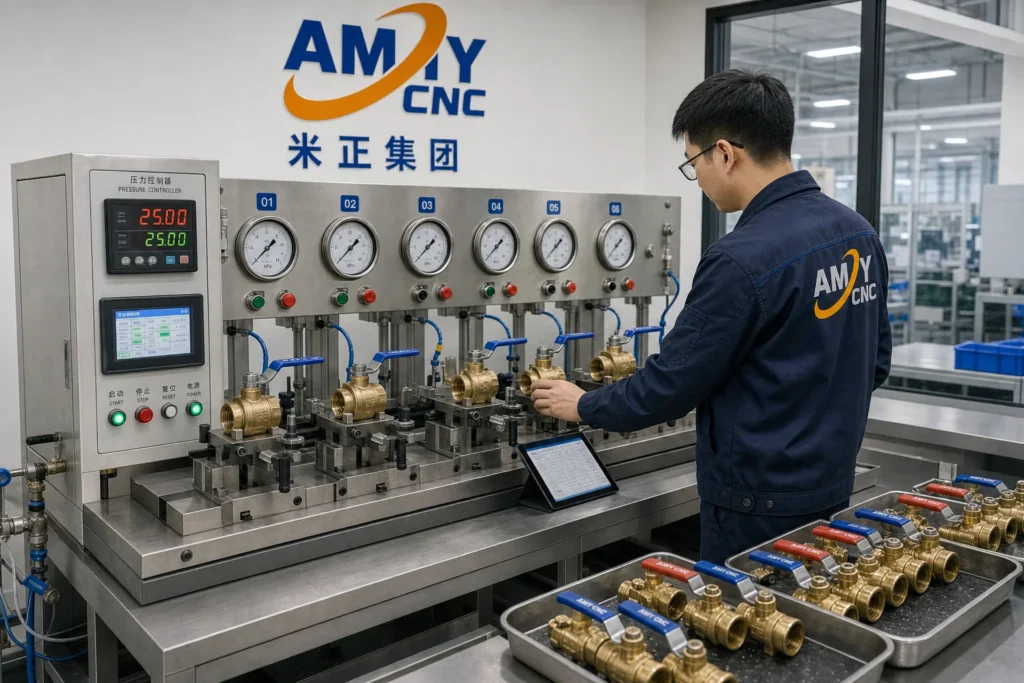
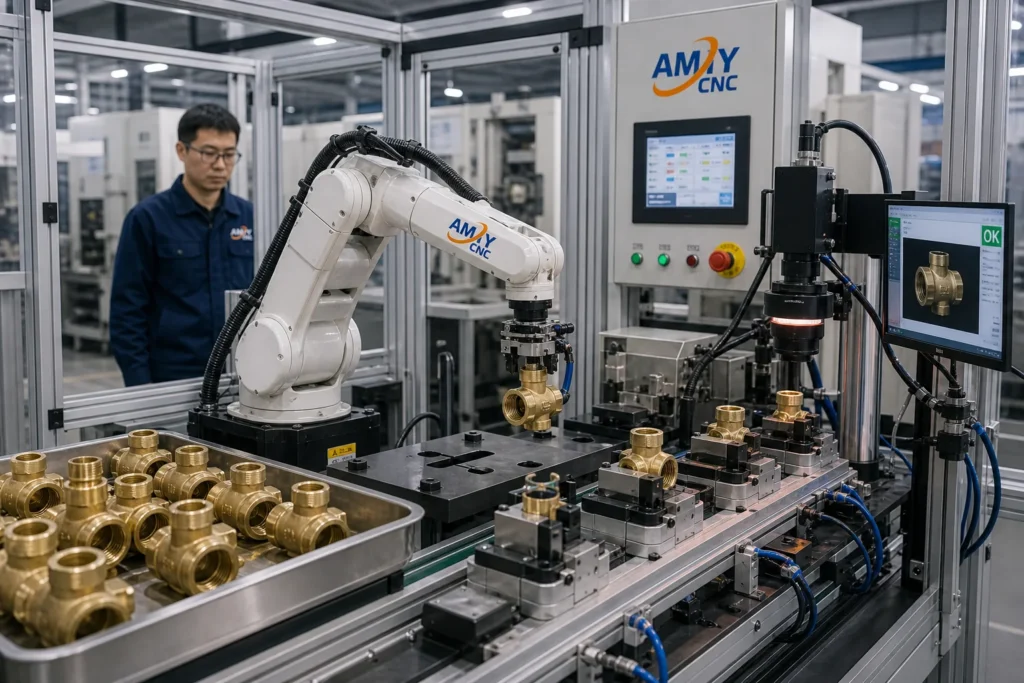
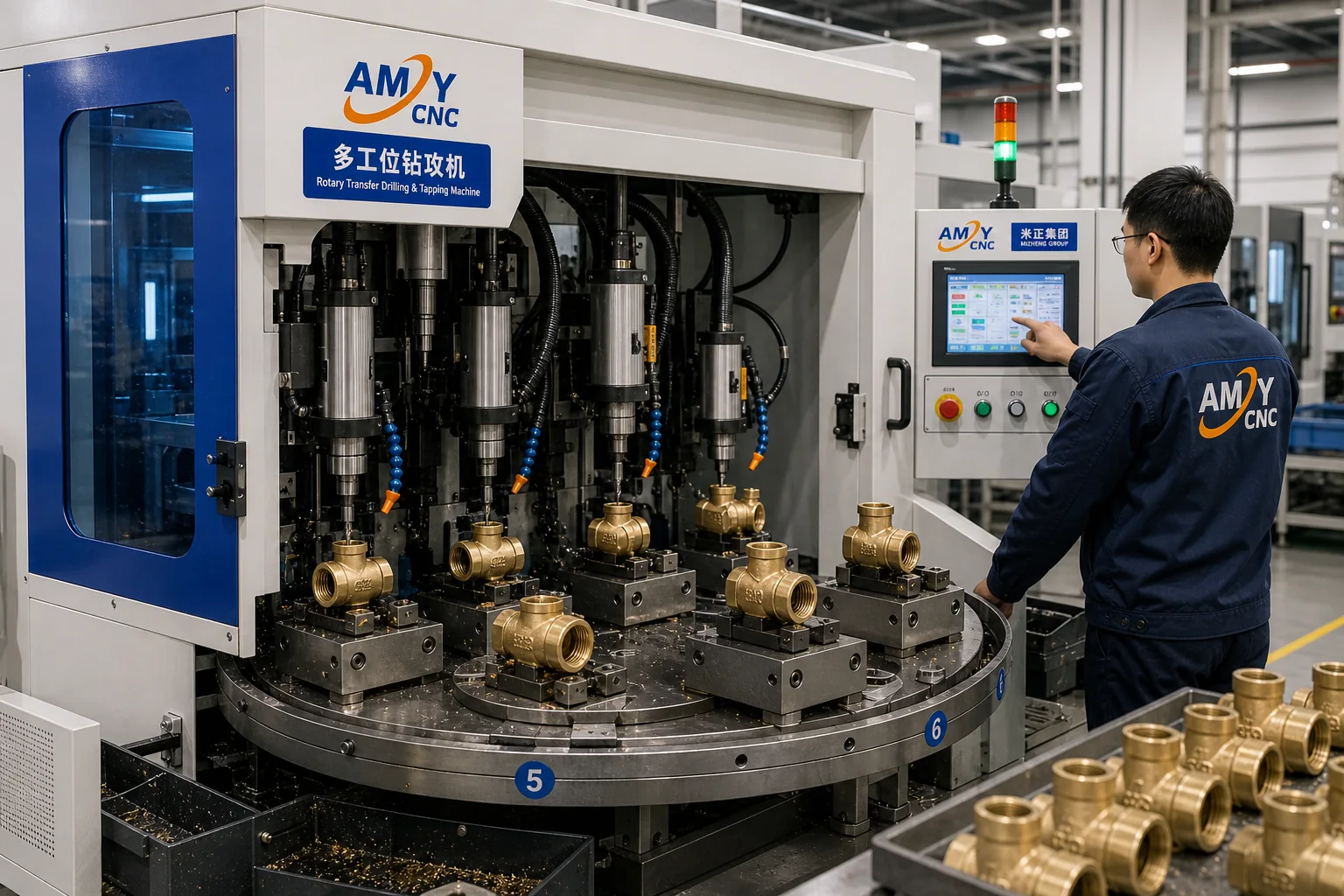
This selection combines one published product image with illustrative rendered scenes. Rendered scenes are not documentary evidence of an AMY CNC-owned facility, customer project, inspection result or shipment.
Compare CNC valve ball grinding data, supplier-catalog model ranges, documents, images and RFQ inputs.
Review ATK80, ATK130 and ATK40 variants with separate overview and model-specific diameter fields.
Plan the catalog 8-station route for valve bodies and tee parts with clamping, cooling and fixture details.
Compare the 6-station configuration under the shared catalog designation and prepare drawing-based RFQ data.
Review valve body and gate-plate sealing-face requirements, a shown catalog configuration and coolant options.
Prepare valve-body or tee-part drawings for rough, finish and tapping or threading process review.
Choose a starting route by buyer problem, then open the comparison for the current evidence boundary and next step.
| Buyer problem | Starting machine category | Next step |
|---|---|---|
| Pressure or leakage testing | Requirement review only; no published test-bench model | Use selection matrix |
| Sealing surface repair | Published grinding model; lapping reviewed separately | Review grinding and lapping requirements |
| On-site maintenance | Requirement review only; no published portable model | Prepare general valve machine RFQ |
| Valve body machining | Workpiece-to-process application review | Plan valve body and fitting machining |
Valve testing, lapping, portable-repair and production-line entries collect buyer requirements. The current public evidence does not establish a named AMY CNC product model or performance scope for those routes.
Start with the valve machine selection matrix, then use the general valve machine RFQ checklist or the grinding and lapping checklist when your sealing-surface repair process is already defined.
Before requesting a quotation, buyers should prepare valve type, size range, pressure or process requirement, machine category, automation level, voltage, drawings, photos, videos, and document requirements. RFQ uploads must remain private and should not be published as public media.
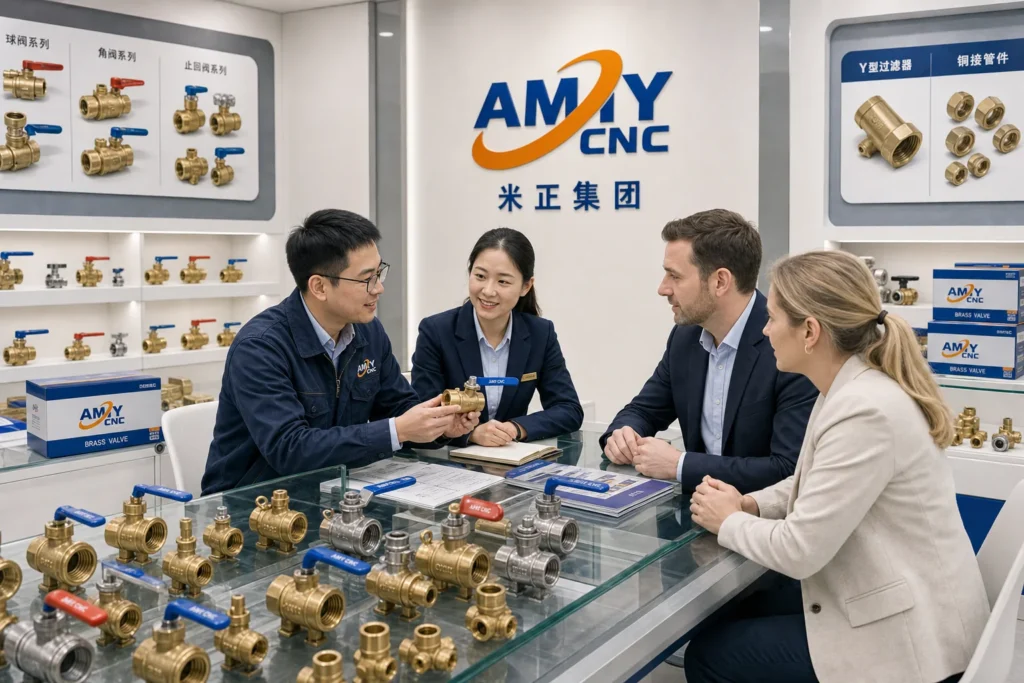
Sales contact
AMY CNC provides one public company number for machinery project questions: +86 18906570891. International buyers can call or use WhatsApp to discuss a machine category, workpiece, application, required operations, utilities, destination or document needs, then use the secure RFQ form to submit detailed project information for private review.
Public company phone and WhatsApp
AMY CNC presents published machine specifications, application ranges, configuration images and RFQ requirements so buyers can compare available routes. Final machine scope, performance targets, documents and supply terms are confirmed against the workpiece and project information submitted for review.