Application detail
Gate Valve Sealing-Face Machining
Gate valve sealing-face machining should be selected from the valve body or gate-plate drawing, sealing-face geometry, material, allowance, finish requirement, clamping datum and loading method. AMY CNC's supplier-catalog evidence shows one 1/2 to 2 inch body and gate-plate configuration with two spindles and hydraulic fixturing. Buyers must confirm the family range, tooling, coolant, utilities and acceptance criteria before quotation.
What decision does this application guide support?
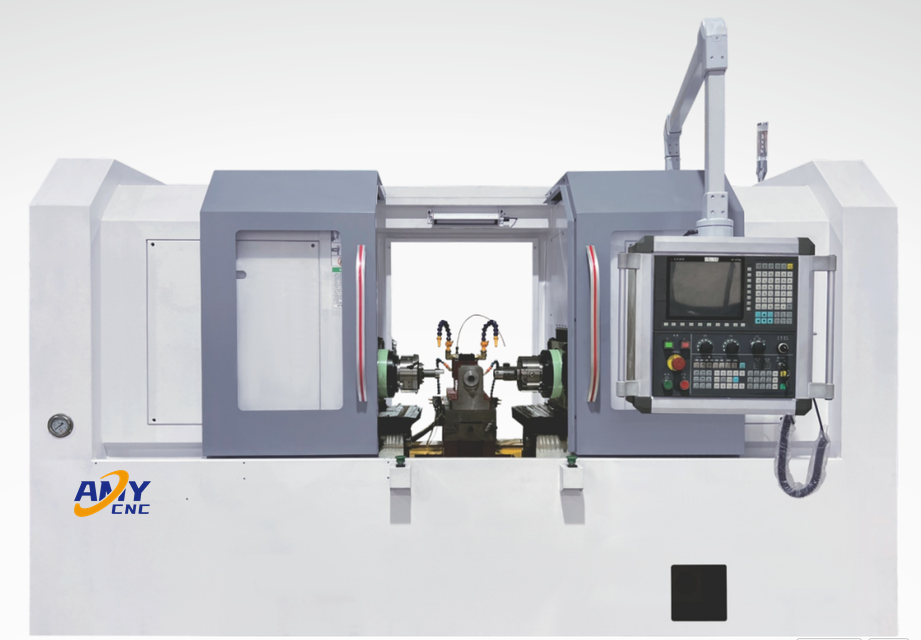
Use this guide when a gate valve body or gate plate requires dedicated sealing-face machining and the buyer needs to organize the workpiece evidence before selecting a machine route. It connects the shown supplier-catalog configuration to the drawing, process, fixture, utility and acceptance inputs needed for a useful technical review.
This page does not establish that every gate valve fits the published model. It does not guarantee tolerance, surface finish, cycle time, output, tool life or acceptance. Those results depend on the actual workpiece, material, allowance, process and agreed project scope.
Which workpiece details determine the sealing-face route?
| Buyer starting point | Decision question | Evidence to provide | Why it changes the route |
|---|---|---|---|
| Gate valve body sealing face | What face, angle, diameter and access direction must be machined? | Body drawing, sectional view, blank photos, material and marked sealing surface. | Geometry and access define spindle approach, fixture orientation and tool clearance. |
| Gate valve gate-plate sealing face | Can the gate plate be located and clamped without obstructing the target face? | Gate-plate drawing, datum, clamping limits, blank condition and representative sample. | Location and clamping affect fixture support, repeatability and loading sequence. |
| Several sizes or materials | Which range must share the same machine and what changeover is acceptable? | Size list, material grades, hardness or treatment, batch mix and changeover target. | Range and material affect tooling, speed, coolant, fixture parts and review scope. |
| Unclear sealing-surface process | Is the need stock-removal machining, later grinding/lapping, or both? | Starting allowance, required finish, current process and final inspection method. | Machining and finishing solve different process stages and should not be treated as interchangeable. |
What does the published machine evidence show?
The values below describe a shown supplier-catalog configuration from the published gate valve sealing-face machine page. They are a comparison baseline, not the complete family boundary or a project guarantee. The buyer's drawing and written process scope control final suitability.
| Published item | Catalog value | Required project confirmation |
|---|---|---|
| Shown application range | 1/2 to 2 inch gate valve body and gate-plate sealing-face machining. | Actual family range, workpiece envelope, face geometry, access, allowance and sample fit. |
| Spindle and speed | Two spindles; published spindle-speed range 300 to 1500 rpm. | Tooling, cutting data, simultaneous sequence, material and required result. |
| Published materials | Bronze, brass and stainless steel. | Exact grade, hardness or treatment, machinability and coolant requirement. |
| Travel and fixture | Z travel at least 150 mm, X travel at least 15 mm, with hydraulic fixture context. | Datum, clamping points, deformation risk, fixture ownership and loading access. |
| Shown configuration reference | 12 to 30 seconds per piece is listed for the shown supplier configuration. | Never treat this as guaranteed project output; confirm the actual operation, allowance, material, loading and acceptance method. |
| Utilities and footprint | AC 380 V / 50 Hz, total 11 kW, about 2.6 x 1.52 x 1.75 m and 3500 kg. | Destination power, installation conditions, floor, handling, coolant and site constraints. |
Review the full published machine page and specification boundary.
How should the body or gate-plate process be prepared?
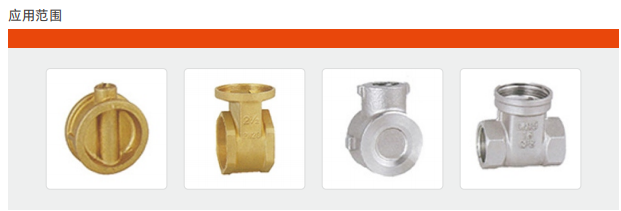
- Mark the exact sealing face on the body or gate-plate drawing and identify its geometry, diameter, angle and access direction.
- Record the blank condition, starting allowance, material grade, hardness or treatment and any interrupted-cut features.
- Define the locating datum, permitted clamping areas, deformation concerns and manual or automated loading preference.
- State the required tolerance, surface condition, burr control, inspection method and whether another finishing step follows.
- Provide the size mix, batch context, target cycle context, utilities, floor limits and required acceptance evidence.
When is sealing-face machining different from grinding or lapping?
Start from the required process stage. Dedicated machining can address stock removal and geometric preparation, while grinding or lapping may address a later sealing-surface finishing requirement. The correct route depends on the starting surface and the measurable result the buyer needs.
| Buyer need | Start with | Related AMY CNC route | Do not assume |
|---|---|---|---|
| Machine a gate valve body or gate-plate sealing face from a defined blank. | Drawing-based sealing-face machining review. | Published gate valve machine | Do not assume the shown catalog size proves family range, fixture fit or finished result. |
| Finish or restore a sealing surface through grinding or lapping. | Compare the required finishing process and workpiece type. | Valve grinding and lapping machines | Do not treat grinding, lapping and stock-removal machining as the same process. |
| Machine several body or fitting faces, holes or threads. | Plan datum, operations, stations and indexed access. | Valve body and fitting machining | Do not choose a sealing-face machine for unrelated multi-operation work. |
| The process category is still unclear. | Compare machine families and prepare the missing inputs. | Valve Machine Selection Matrix | Do not select from a product name without the drawing and required result. |
What should a gate valve sealing-face RFQ include?
| RFQ data group | What to provide | Why it matters |
|---|---|---|
| Workpiece definition | Body or gate-plate drawing, revision, photos, size range, blank condition, material and representative samples. | Defines the envelope, face, datum, access and first fixture review. |
| Machining requirement | Marked sealing face, allowance, angle, dimensions, tolerances, surface requirement and burr control. | Defines the required operation and the evidence needed for process acceptance. |
| Fixture and handling | Permitted clamping areas, deformation limits, loading method, changeover and orientation. | Controls location, support, operator access and fixture concept. |
| Production context | Part mix, batch size, shift pattern, target cycle context and downstream process. | Provides context for capacity review without converting a catalog range into a guarantee. |
| Site and supply scope | Voltage/frequency, coolant, floor and handling limits, destination, documents, trial and acceptance expectations. | Defines installation and quotation boundaries that are not fixed by the model page. |
Buyer questions about gate valve sealing-face machining
Can the machine be selected from valve size alone?
No. Size is only one input. The body or gate-plate geometry, sealing-face access, material, allowance, datum, clamping and required result must also be reviewed.
Is the 12 to 30 second range guaranteed?
No. It is supplier-catalog reference data for the shown configuration. Project cycle and output depend on the actual operation, material, allowance, loading, tooling and acceptance scope.
Does the two-spindle layout fit every workpiece?
No. The published layout is a comparison baseline. Tool access, fixture clearance, workpiece orientation and the required sequence must be checked from the drawing.
What is the minimum evidence for review?
Provide a current drawing, clear photos, material, blank condition, marked sealing face, allowance, tolerance, finish requirement, clamping limits, loading and utilities.
When should grinding or lapping be discussed?
Discuss it when the required result concerns a later sealing-surface finishing stage rather than only stock-removal machining. Define the starting surface and final inspection method.
Which claims remain outside the public evidence?
The public evidence supports the machine image, representative application range and catalog values stated on this page. It does not establish an AMY CNC-owned factory, customer installation, certification, standards compliance, production output, tolerance result, surface result, service location or buyer acceptance. Any project-specific performance, commercial term or supply commitment must be confirmed in the written quotation and acceptance scope.
Related machine, application and buyer-resource pages
- Gate Valve Sealing-Face Machining Machine
- Valve CNC Special Machines
- Valve Machinery Applications
- Valve Body and Fitting CNC Machining
- Valve Grinding and Lapping Machines
- Valve CNC Special-Machine RFQ Checklist
- Valve Machine Selection Matrix
- Valve Machine Buyer Guides
- Valve Machine Categories
- Published Valve Machine Index